Water
Mountain river with humid siliceous characteristics. Single-channel, low-sinuosity channel with marginal and central bars. The riverbed consists of coarse sands, gravels, and pebbles. Environmental flow rate of 1.04 m³/s, mean flow rate of 3.51 m³/s, and a four-year return period flow rate of 26 m³/s. Altitude of 834 meters. The catchment area is 15 km² with a perimeter of 26 km and elevation range from 834 to 1,446 meters.
Location
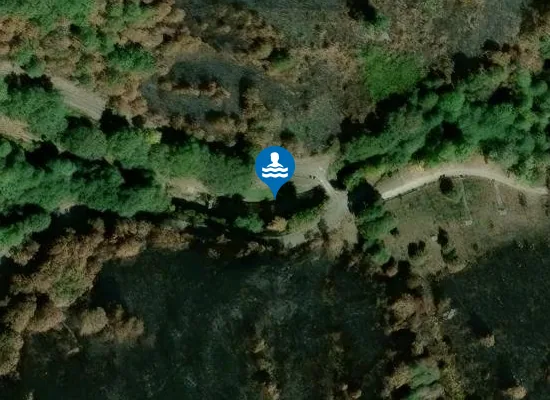
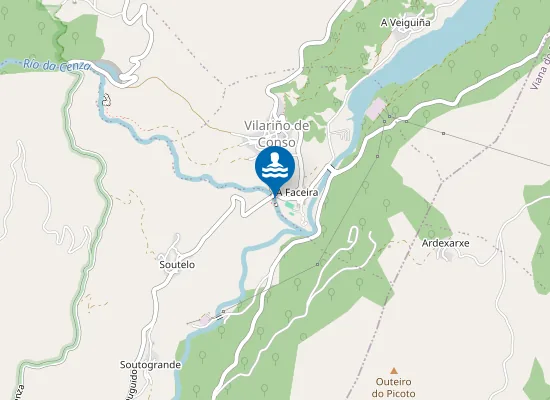
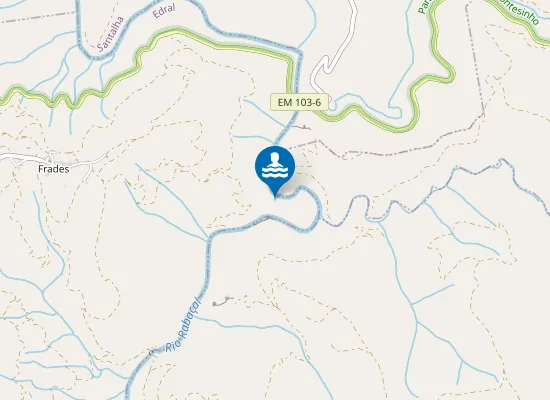
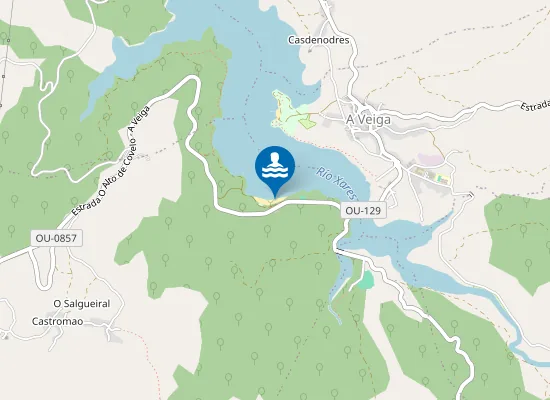
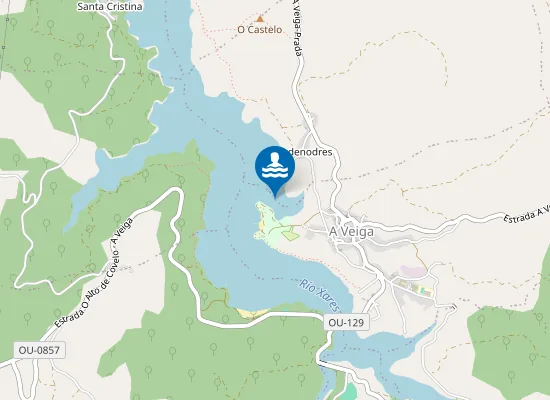
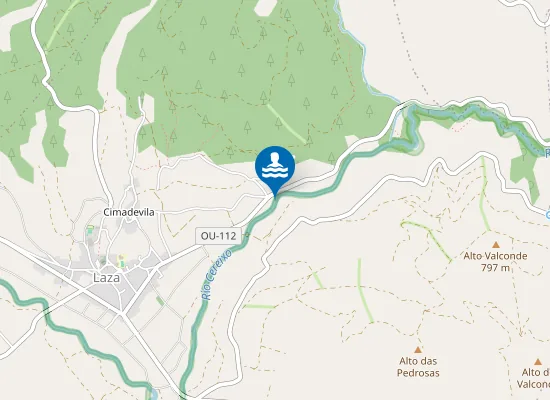
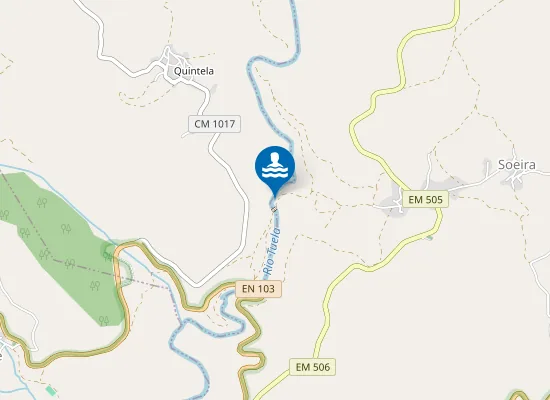
A Gudiña municipality in Orense province, Galicia. Access is from A Gudiña by heading toward the cemetery (passing under the A-52 highway), then taking the exit at the roundabout for the road running parallel to the cemetery, which leads directly to the bathing zone. No parking is available.
Facilities
Picnic areas and water fountains are available. Metered facilities include no parking, no rescue posts, no information signs, no bar/chiringuito, no toilets, no showers, no swimming pools, no boat landing, no recreational zone, no domestic animal access information, no garbage collection details, and no sanitation service information.
Season
June 1 to September 30
Water Quality
Water quality classified as good for all monitored seasons from 2015 to 2018 according to Real Decreto 1341/2007. Monitoring tracked intestinal enterococci and Escherichia coli concentrations. Potential contamination sources include livestock farming (717 bovine, 151 ovine, 302 porcine, 66 equine, and 18 avian heads) in the Gudiña municipality, agricultural runoff from fertilized fields and meadows, occasional user self-contamination during peak bathing periods, and a wastewater treatment facility (E.L.M Canizo in A Gudiña) located 4,455 meters away on the Espadana river.
Risks
Short-duration contamination risks include livestock runoff from storage system failures or overflows, agricultural runoff from heavy rain on fertilized fields, accidental or illegal discharges near the bathing zone, dead animals appearing in the zone, sediment remobilization from heavy rain or high bather numbers, organic waste from strong winds or heavy rain, and abnormally reduced river flow conditions that concentrate contamination. Risk evaluation shows self-contamination by bathers during peak weekend periods and diffuse ganadery and agricultural sources as significant pressures.